
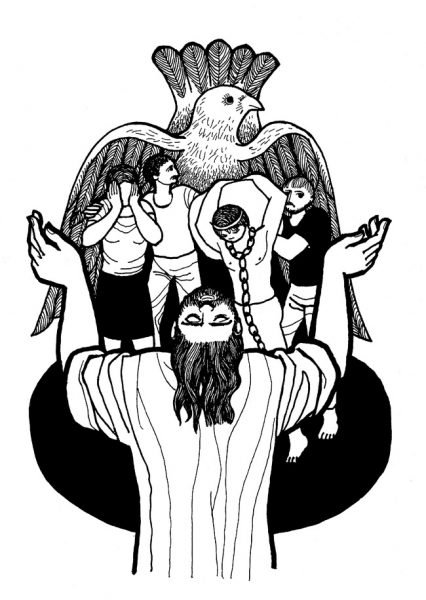
The Sixth Sunday of Easter | May 10th, 2026 | The Rev. Karen Haig
“If you love me, you will keep my commandments.” Now I know our gospel reading had a lot more to say than that, and the other readings did too, but I have to tell you, that first line stops me up short. “If you love me, you will keep my commandments.” I love Jesus, and God knows that I want to keep His commandments, but do I? Can I? How do I love God? How do you?
“If you love me, you will keep my commandments.” Jesus said these words to his disciples on Maundy Thursday, that last evening, just after their last supper together, just after he had washed their feet. He knew he was leaving and the disciples knew it too. It was a confusing time, a tender time, a sad and scary time. It was a time when there wasn’t much time left, a time when every last word mattered. If we take seriously the reality that Jesus was saying goodbye to his friends, to his earthly ministry, to his very life that night, the things he chose to say take on new meaning for us.

The Fifth Sunday of Easter | May 3rd, 2026 | The Rev. Jim Friedrich
Come my way, my truth, my life; such a way that gives us breath, such a truth that ends all strife, such a life that killeth death.
To everyone who has been caught up in the story of Jesus and his call for us to follow him, Jesus says, “I am the way, I am the truth, I am the life.” These words are meant to encourage us; yes, you are on the right path, yes, you can truly trust me, yes, this way is life-giving. Jesus isn’t talking about the fate of those who do not know him by name. He’s talking about the Christian people. This gospel text is not addressed to those outside that life, telling them how wrong they are. It is speaking, rather, to those dwelling within that life who every day engage with the particular challenges and blessings of the way, the truth, and the life.
The Fourth Sunday of Easter | April 26th, 2026 | The Rev. Irene Tanabe
Have you ever been presented with an opportunity to try something new, or to change in some way and found yourself saying, “Nope. I don’t think so. Not going to do that. Just not comfortable doing that.”?
I can think of many times. Like the time I got asked by The Rev. Jerry Shigaki, a beloved priest in this diocese, “will you join my group to discern your call to the priesthood?” “Are you kidding me? Why would I do that? No thank you, I’m quite comfortable with where I am now.”

The Third Sunday of Easter | April 19th, 2026 | The Rev. Jim Friedrich
Then they told what had happened on the road.
“On the road” is a phrase that invokes one of the two basic motifs in both literature and life. Either you stay home, or you go out on the road. To paraphrase Hamlet, to move on or not to move on, that is the question. Either you stick around and deal with whatever’s happening in your given world of attachments, obligations, and responsibilities, or you leave it all behind, crossing the boundary and closing what is familiar into a new and unpredictable reality, the unknown territory where you will encounter rare beasts and have unique adventures.
Sometimes you’re on the road to escape, because whatever you left behind was killing you, and you just had to get out, even if you had no idea where you’d end up. Sometimes, you’re on the road because you’re on a quest, searching for something essential you’re just not going to find until you leave home and risk the way of unknowing. Stories about being on the road go way back. Think of Homer’s Odyssey or the Exodus in the Bible. Those journeys had a goal; getting back home or to the promised land, but all that was somewhere over the rainbow. Meanwhile, the journey, as most journeys prove to be, was as much or more about what happened on the road, as it is about whatever happens at the end.
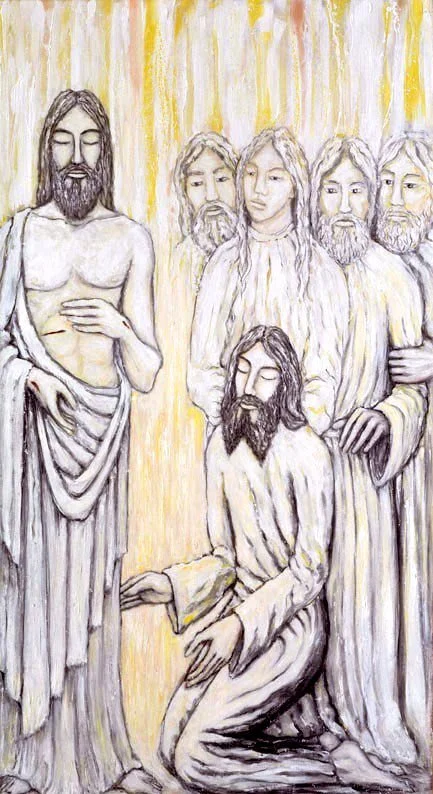
The Second Sunday of Easter | April 12th, 2026 | The Rev. Irene Tanabe
When I was a little girl, I would often run and hide when I knew I was in trouble. I have vivid memories of my dark and enclosed hiding places. I was barely three years old, but I remember the smell of dust and mildew as I hid in the shed in the back of our house in Tokyo.
When I was five years old, my siblings and I lived for a while with my aunt and uncle here in Seattle. There, I figured out a way to climb up into the garage rafters to hide, the smell of freshly mown grass clinging to the push mower in the corner. Looking back, I recall that while I had hidden myself away, I desperately needed to be found! Usually, it was my father who would come looking for me and it didn’t take much to coax me out. But there were times when it didn’t seem like anyone was looking for me. I suppose that’s what I feared the most.

Easter Sunday | April 5th, 2026 | The Rev. Jim Friedrich
When Jesus rose from the dead, why did he appear to his disciples? Why did he hang around for 40 days instead of proceeding immediately to the Ascension? We might imagine him washing his hands of the whole earth and mortality thing, putting it behind him like one of those terrible trips to a place we never want to go back to again.
But instead of pulling away, he came back to get his friends. He wasn’t going to go off by himself into God’s glorious future without bringing them along. On the night before he died, he promised, “I go to prepare a place for you.” And when he had passed through death into the risen life, he came back to get his friends, and he keeps coming back, for you, and me, and everyone else who wants to share in the abundant life of God.
Many Christian paintings of the resurrection show a solitary Jesus rising out of the tomb, stepping out of the tomb. No one else around except maybe some soldiers, but they’re sleeping through it, they miss it. But the orthodox icon for the resurrection always has Jesus reaching back and pulling Adam and Eve out of the grave with him, and by implication all the rest of us as well. He’s pulling them into the new creation where the tears will be wiped from every eye, where sorrow and sighing are no more, but only life everlasting.
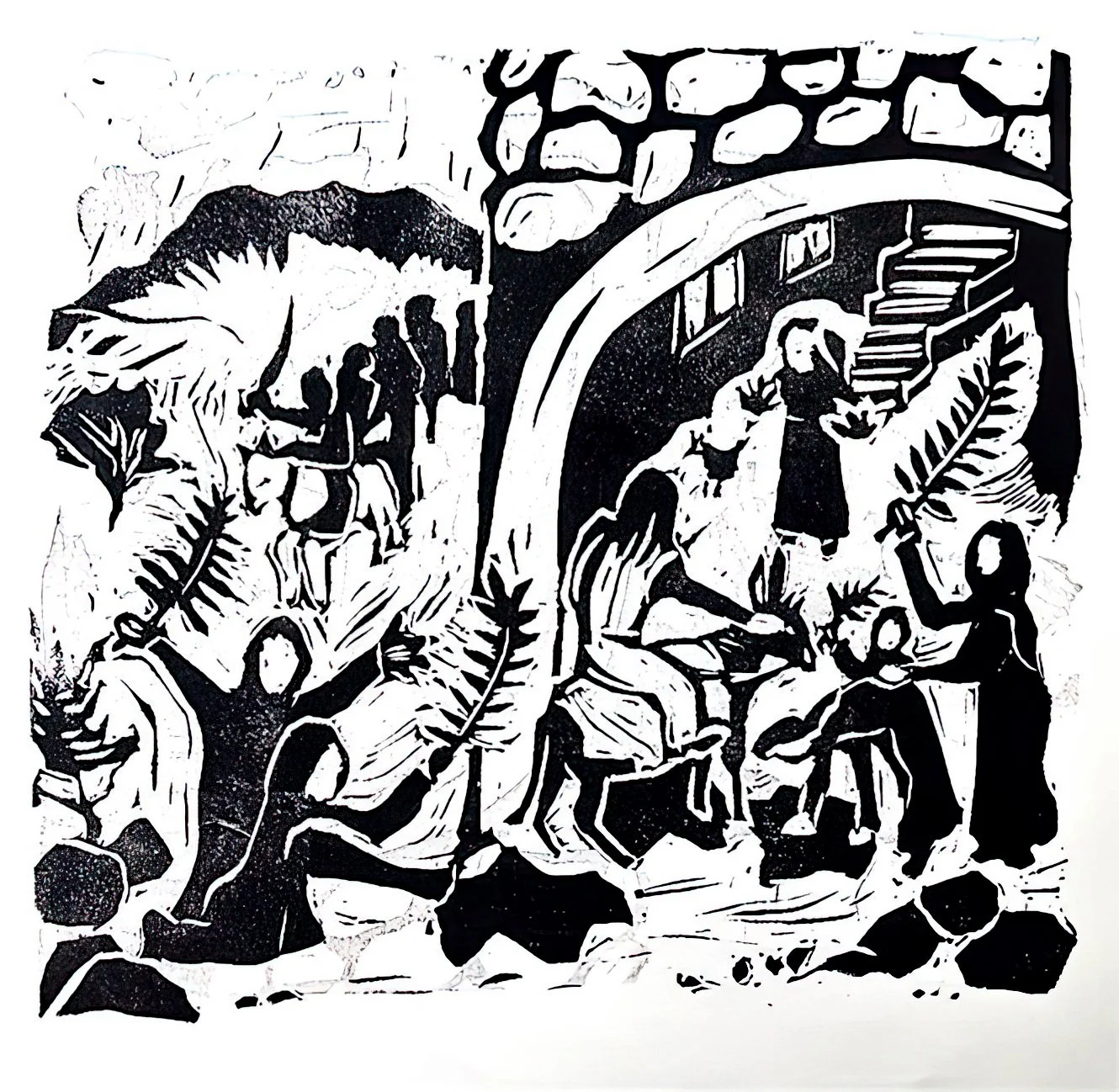
Palm Sunday | March 29th, 2026 | The Rev. Irene Tanabe
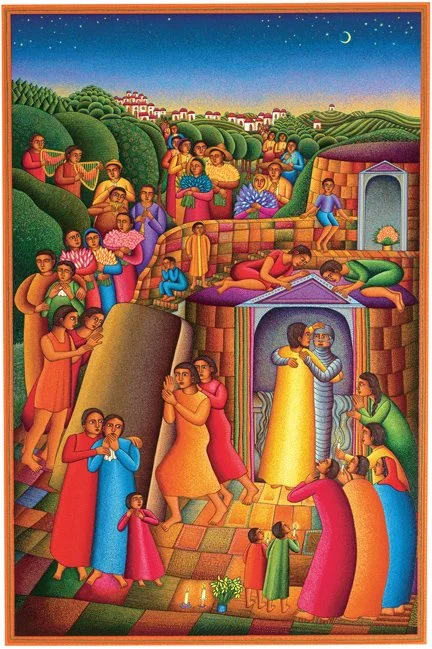
Several years ago, I saw a movie that I have not been able to forget. It’s called “Lion.” It is a story based on an autobiographical book “A Long Way Home,” by Saroo Brierly. In 1986, five-year old Saroo got lost when he hopped on the wrong train, and days later found himself transported from rural India to the streets of Calcutta. Even though he knew the name of his home village, no one recognized where that could be. He eventually ended up in an orphanage and was adopted by an Australian family. But as he was growing up with his new parents, he never forgot his family in India. Every night as he went to bed, the images of his life before flashed before him: the train station with 3 platforms, a water tower, the rocky field where his mother labored. Every night in his dreams, he searched for his beloved mother and older brother, running from the train station through the alleys and byways that would take him home.
Fifth Sunday in Lent | March 22nd, 2026 | The Rev. Irene Tanabe
Here we are, the last Sunday in Lent. Next week is Holy Week, and the most solemn days in our liturgical calendar are upon us. But I have to admit, I’ve had a hard time settling down to focus on the journey to the cross. Between the excitement of the world baseball classic, and now that MLB opening day is upon us, my mind has been everywhere but Bethany.
I was with some friends the other day and the topic of conversation was what we would wish for if a genie granted us just one wish. While my friends asked for things like world peace and an end to hunger, I shamefully wished for tickets to opening day, or any day for that matter! It’s easy to laugh, but truth be told, I think I was responding to how unattainable a just and peaceful world would be, what it would feel like. I asked for baseball tickets because I didn’t think I could handle the weight of asking for anything bigger (not that baseball tickets aren’t big!)

Fourth Sunday in Lent | March 15th, 2026 | The Rev. Jim Friedrich
As he walked along, Jesus saw a man who had been blind from birth.
In the very first sentence of this gospel passage, Jesus sees a man. He sees him. No one else in the story sees him, not really. If they noticed him at all, they saw nothing but just another blind beggar thrusting out his hand at the city gate, prompting them to avert their eyes and put him out of mind. We know this because as soon as he was healed, no longer blind, no one seems to recognize him as the same person.
For a moment, the dialogue gets pretty comical. Is this the blind guy? He can’t be the blind guy—his eyes are fine. But he looks kind of like the guy. But he can’t be the guy! They keep talking about him like this, as if he weren’t even there, until finally he cries out, “Hey! I am the guy!”
Third Sunday in Lent | March 8th, 2026 | The Rev. Irene Tanabe
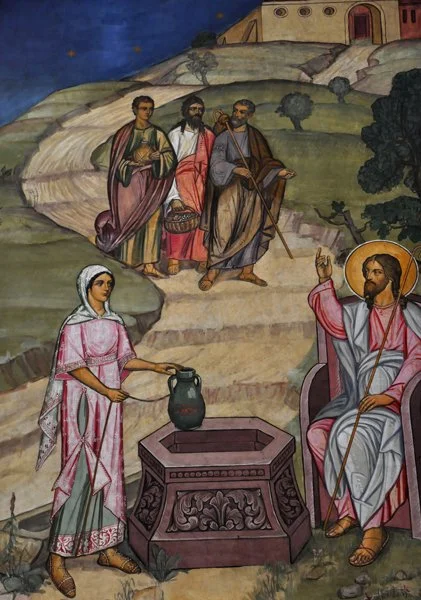
esus came to a Samaritan city called Sychar, near the plot of ground that Jacob had given to his son Joseph. Jacob’s well was there, and Jesus, tired out by his journey, was sitting by the well. It was about noon.
A Samaritan woman came to draw water, and Jesus said to her, “Give me a drink.” (His disciples had gone to the city to buy food.) The Samaritan woman said to him, “How is it that you, a Jew, ask a drink of me, a woman of Samaria?” (Jews do not share things in common with Samaritans.) Jesus answered her, “If you knew the gift of God, and who it is that is saying to you, ‘Give me a drink,’ you would have asked him, and he would have given you living water.” The woman said to him, “Sir, you have no bucket, and the well is deep. Where do you get that living water? Are you greater than our ancestor Jacob, who gave us the well, and with his sons and his flocks drank from it?” Jesus said to her, “Everyone who drinks of this water will be thirsty again, but those who drink of the water that I will give them will never be thirsty. The water that I will give will become in them a spring of water gushing up to eternal life.” The woman said to him, “Sir, give me this water, so that I may never be thirsty or have to keep coming here to draw water.”
Second Sunday in Lent | March 1st, 2026 | The Right Reverend Bishop Phil LaBelle
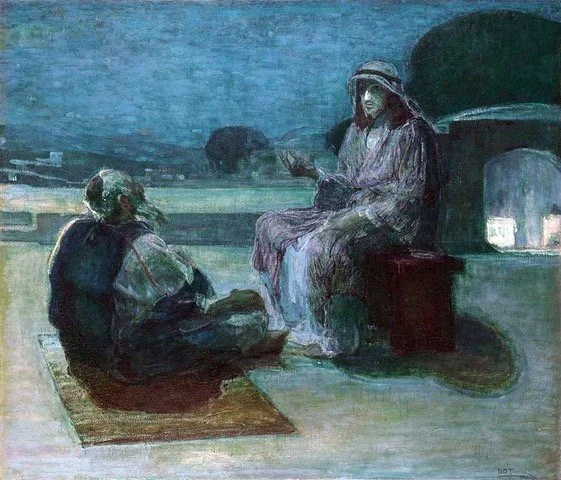
“So there was this person,” St. John the Evangelist tells us, “named Nicodemus, who was a Pharisee, a ruler of the Jews.” And with that single sentence we learn a lot about good ol’ Nick. He’s smart and religious, and, after he utters his own first statement, we learn that he’s also faithful and inquiring about the things of God. He’s taken by what he’s heard about Jesus. But he’s also hedging a bit. He comes to talk to Jesus, yes, but he grabs an appointment after night has fallen. He doesn’t choose to meet Jesus at the local coffee shop mid-afternoon. Not a chance. He comes quietly, in the shadows, to a clandestine place to suss all this out, to see who Jesus really is.
“Rabbi, we know that you are a teacher who has come from God; for no one can do these signs that you do unless God is with that person.” We’re not told who this “we” is in his sentence. Potentially Nicodemus is using the “royal we” that some leaders do, or maybe he just means those who have seen the miraculous works of Jesus—those signs like turning water into wine—and taken an interest in following him. Certainly he’s not referring to the Pharisees as a whole who already have some issues with Jesus. But he is seeing himself as part of a larger group, a collection of people who are wondering about Jesus.
First Sunday in Lent | February 22nd, 2026 | The Rev. McKenzi Roberson
Welcome to Lent. We started this season on Wednesday, gathering in this space to be reminded of our mortality with ashes smudged on our foreheads, and being invited to a time of shedding distractions, introspection, prayer, and repentance. Today we leaned into that call to prayer by starting our worship with the Great Litany, a prayer that (at least in broad strokes) prays for just about everything. We have come to the threshold of Lent and taken our first step through.
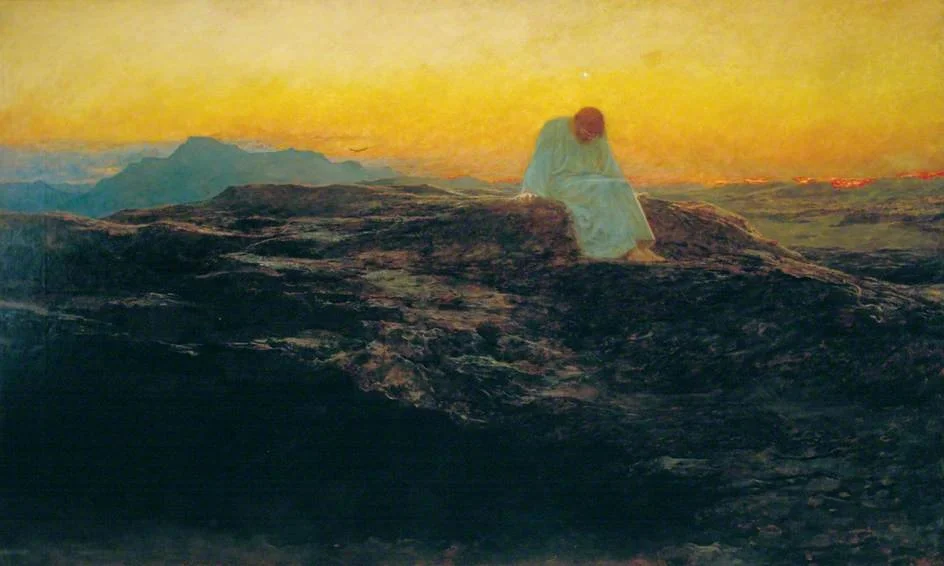
Similarly, in our Gospel this morning, Jesus has come to the threshold of his public ministry and is about to step through. Just before we pick up the story, Jesus was baptized. He submitted himself to this human experience and was claimed as God’s child “with whom I am well pleased.” It’s a powerful moment for Jesus, and from that place of strength, made sure in his identity as God’s son, Jesus follows the spirit out to the wilderness to be tempted.

Ash Wednesday | February 18th, 2026 | The Rev. McKenzi Roberson
Have y’all spent much time with the book of Joel? It’s a short book, just three chapters long. It might take you seven minutes to read it if you’re doing just a little more than skimming. The prophet tells of war and economic and ecological ruin – and ecological ruin means famine. These are dark and urgent times. Something must change, and it must change soon.
An interesting detail in the study of Joel is that it cannot be conclusively dated. There are no references to kings or a clear lineage of the prophet, so there are centuries in which it could be dated. Part of what that means is that there is a certain timelessness to this text. Warfare and violence, economic uncertainty, and food insecurity are near constant presences in this world across the ages, even into today.
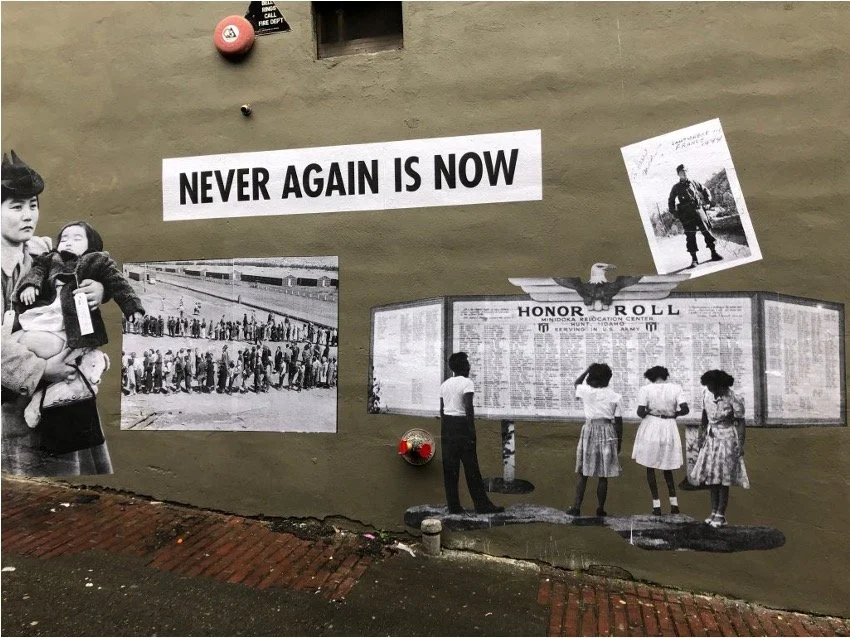
Last Sunday after Epiphany | Day of Remembrance | February 15th, 2026 The Rev. Irene Tanabe
A few weeks ago, I received an email from Reverend Nat inviting me to participate in St. Peter’s Day of Remembrance Eucharist. When I opened the message, I was surprised to find myself moved to tears, tears that I thought had dried up years ago. Why the tears, I wondered, and why the surprise? I had long assumed I was finished grieving the incarceration of Japanese Americans, but this month I learned that grief has a way of resurfacing, especially when our history remained unspoken for so long, tucked into family silences and passing references.
Growing up, I didn’t spend much time in Seattle, even though my Issei grandparents lived here, my father grew up here. Perhaps that distance insulated me, perhaps not. My family’s lives were forever changed on this day some eighty-four years ago, eighty-five years, yet it was a story not told to my generation when we were young. My grandmother would speak about “camp”, mentioning people or experiences as if recalling a childhood summer. Only later did I realize that “camp” was not a place of recreation, but a place of forced removal and incarceration.
5th Sunday after Epiphany | February 8th, 2026 | The Rev. Canon Cristi Chapman
Friends, it is good to be with you today. My name is Christi Chapman, and I am the Canon to the Ordinary for the Diocese of Olympia. Bishop LaBelle and Nat and I have had conversations this week, and the Bishop asked if I would be with you today, as you begin your leave-taking with Nat, so please know that you are in our prayers and in our hearts in this tender time.
So I’ve only explored caves a handful of times. The last time was more than 30 years ago, but memories of that trip remain burned in my head as if it happened yesterday. That day my husband and I visited a cave that was not far from his parents’ house. It was a well-known spot and one that many amateur spelunkers liked to visit. The day that we went, we were surprised, and yes, a little relieved, to discover that we would have the cavern to ourselves that day. So after grabbing a flashlight and donning our jackets, we made our way into the earth. And within minutes, the only visible light that we could see came from my husband’s flashlight. For nearly an hour, that sole source of light was the only thing that lit the way, as we scrambled over boulders and squeezed ourselves into increasingly …
4th Sunday after Epiphany | February 1st, 2026 | The Rev. McKenzi Roberson
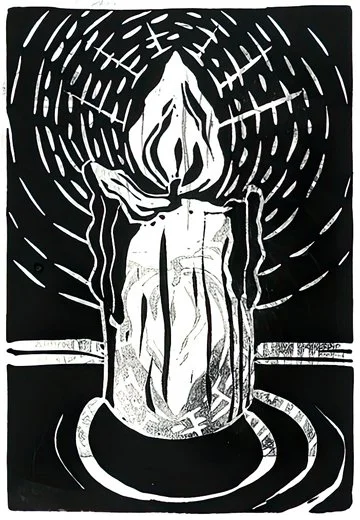
One of my favorite annual experiences in seminary was the Easter vigil. It starts, as Easter vigils tend to do, by gathering outside of the church and lighting the paschal fire. These are often sizeable fires, but in Sewanee the dean of the school of theology is also a captain in the volunteer fire department, and a handful of the seminarians also serve as firefighters. You know that people who know how to put out fires are also experts at building giant fires. These flames would leap ten, maybe even twelve feet in the air, burning so hot it was uncomfortable to be within six feet of the flames.
This wild flame would then be used to light the paschal candle, and from that candle all the small candles we each carry would be lit as we processed into All Saints Chapel. Those small, tame candles, born of the wild paschal fire, would then be the only light, but indeed enough light, in the chapel as we recalled the story of God’s salvation history.
I’ve been thinking about flames a lot this week, and not only because of the low snowpack out on the Olympics. I’ve been thinking about flames not least because my gallows humor coping mechanism was entirely engaged by a picture of a cross stitch I saw online. The image was some neatly done bits of flame framing the phrase, “I was told there would be handbaskets.”